Why Grand Turk Is the Best Place to Swim with Humpback Whales
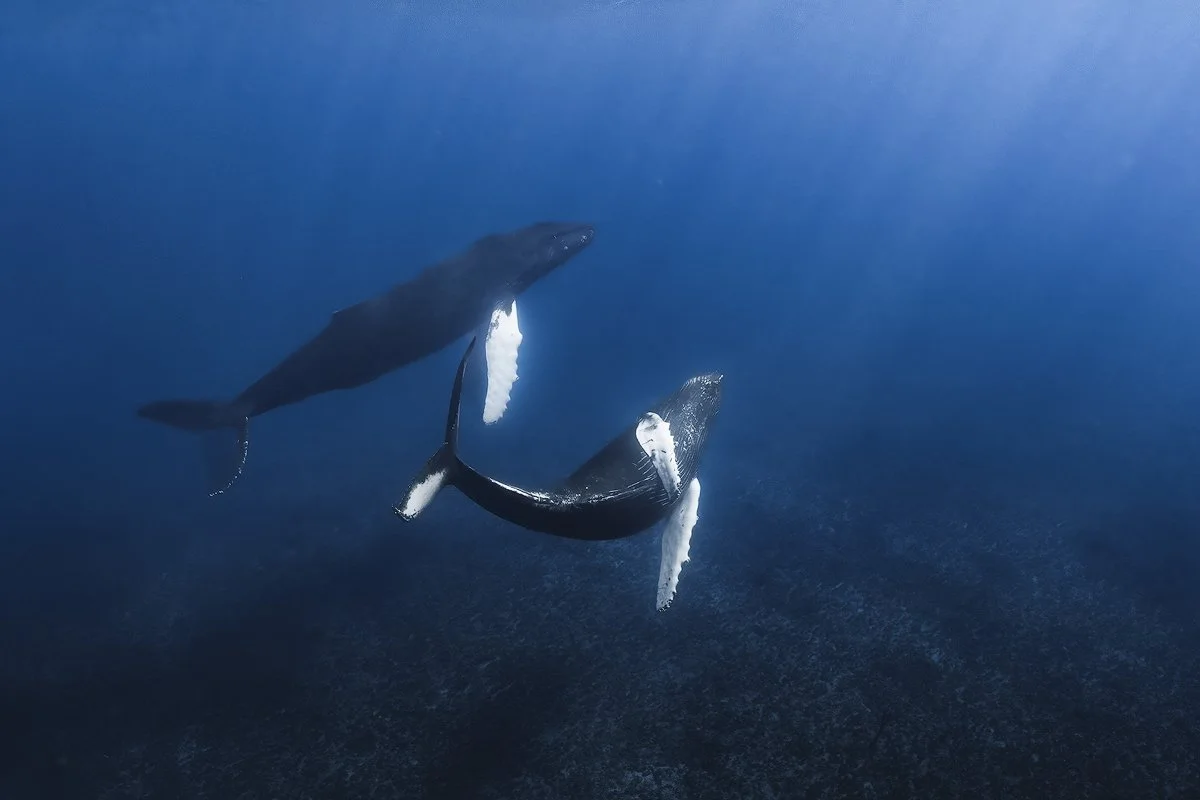
Humpback whales in Turks & Caicos | Photo © copyright by Joe Garza.
Every March, tens of thousands of humpback whales migrate through the Turks and Caicos Islands on their way north. They come to breed, to give birth, to sing — and for a few weeks, they linger in the warm, shallow waters around Grand Turk in numbers that make in-water encounters not just possible, but genuinely likely.
Humpback whale watching in Turks and Caicos has been drawing wildlife enthusiasts for years. But watching from a boat is one thing. Slipping off the back of it into 20 feet of crystal-clear water while a 50-foot whale glides beneath you — that's something else entirely.
If you've been researching where to swim with humpback whales — whether you've been looking at Tonga, the Silver Banks in the Dominican Republic, French Polynesia, or somewhere closer to home — here's an honest breakdown of every major destination and why Grand Turk stands apart from all of them.
The Top Destinations for Swimming with Humpback Whales — And How They Compare
Swim with Humpback Whales in Tonga — The Gold Standard, at a Price
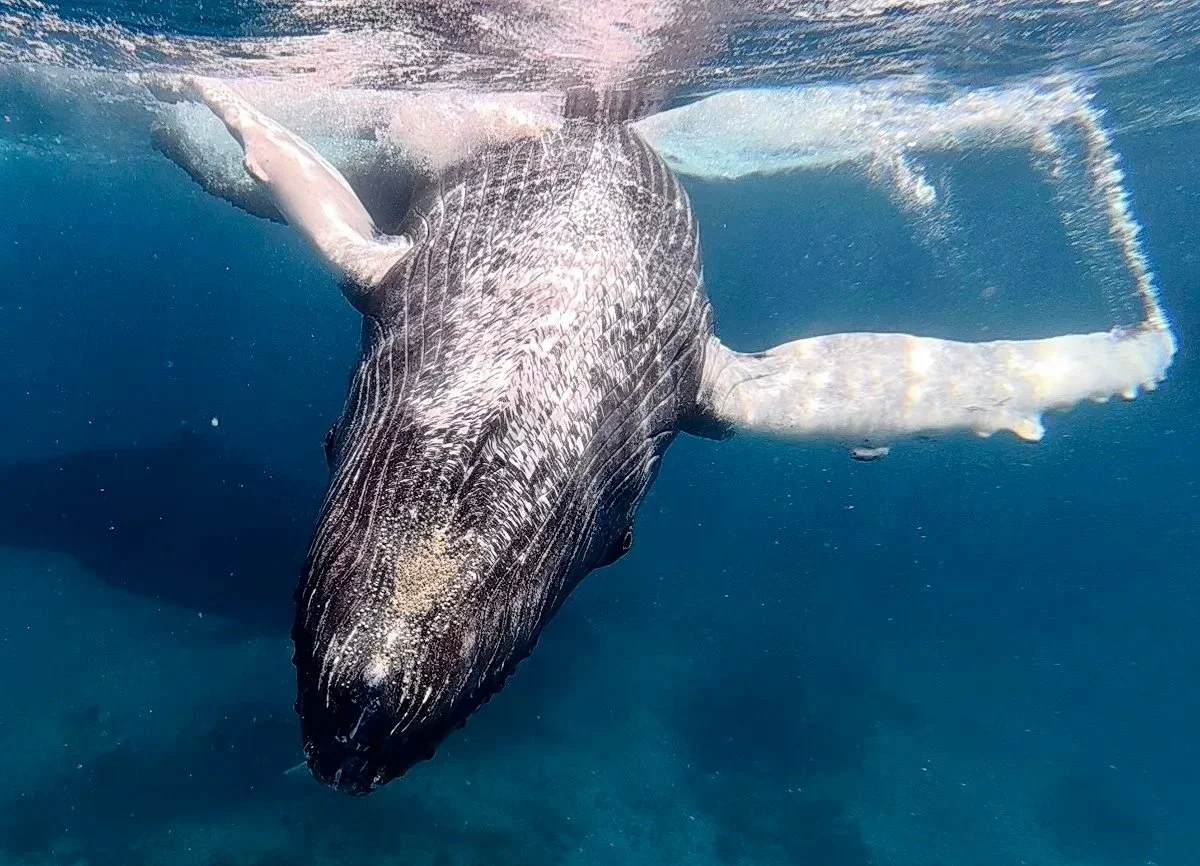
Playful humpback whale calf in Grand Turk, Turks & Caicos.
If you've been researching how to swim with humpback whales, Tonga has probably come up first. The Kingdom of Tonga is widely considered the premier destination in the world for in-water humpback whale encounters, and it earns that reputation. Humpback whales migrate to Tonga's warm waters between July and October to breed and give birth, and the encounters here can be extraordinary — prolonged swims with mothers, calves, and escort whales in clear, warm water.
But swimming with humpback whales in Tonga comes at a significant cost — and not just financially.
Getting to Tonga from the East Coast of the U.S. requires 15+ hours of travel, multiple connections, and a time investment that rules it out for many travelers. The season runs July through October — Southern Hemisphere winter — which means trading your summer for a long-haul flight. Quality Tonga whale swim experiences typically run $8,000–$10,000 USD before flights, which can add another $1,500–$2,500 or more from the continental US.
Tonga is extraordinary. But it asks a lot of you to get there.
Best for: Serious underwater photographers and wildlife enthusiasts willing to make the journey and the investment.
Swim with Humpback Whales at Silver Banks, Dominican Republic — Liveaboard Only
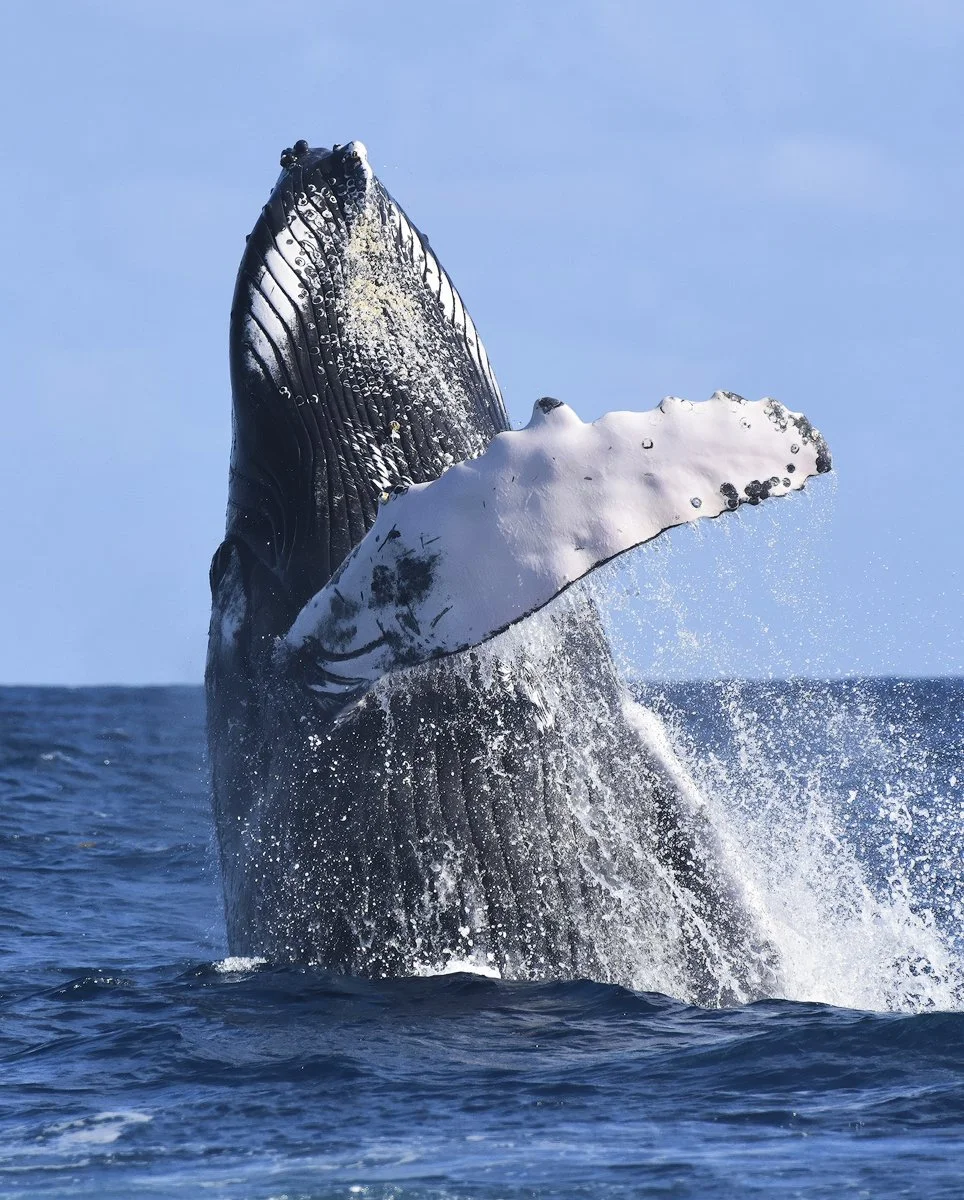
Humpback whale breaching off the coast of Grand Turk.
The Silver Banks in the Dominican Republic is one of the largest humpback whale breeding and calving grounds in the world. An estimated 3,000–5,000 humpbacks pass through these waters each winter, making it one of the most reliable places on earth to swim with humpback whales. Silver Banks encounters are legendary — long, slow swims with curious whales in remarkably shallow water, with animals that seem almost unbothered by human presence.
The catch: swimming with humpback whales at Silver Banks is liveaboard only. There is no land-based option. You board a vessel in Puerto Plata, Dominican Republic, and spend the entire week living aboard — sleeping, eating, and spending every waking hour on or near the water. For many people, that's the dream. For others, a week on a boat is a dealbreaker.
Getting to the Silver Banks requires a flight to the Dominican Republic, ground transportation to Puerto Plata, and transfer to the liveaboard — a full day of logistics before you even set sail. The season runs January through April, and quality berths on reputable Silver Banks liveaboards fill up a year or more in advance.
Humpback whale liveaboard Dominican Republic trips typically run $5,500–$7,000 per person, not including flights.
Best for: Travelers who are comfortable living aboard a boat for a week and want maximum in-water whale time.
Swim with Humpback Whales in Mo'orea, French Polynesia — Stunning but Far
Mo'orea has emerged in recent years as a genuinely spectacular alternative for humpback whale encounters. The setting is extraordinary — turquoise lagoons, lush volcanic mountains, some of the most visually dramatic scenery on the planet. Humpback whales visit French Polynesia between July and October to breed and give birth, and in-water encounters take place in the open ocean off the island.
Swimming with humpback whales in Mo'orea, French Polynesia is a bucket-list experience in every sense. But the logistics are similar to Tonga — it's a 10–12 hour flight from the US West Coast, longer from the East Coast, and the cost reflects that distance. Season timing (Southern Hemisphere winter, July–October) means competing with summer travel demand for flights and adding international travel complexity.
Best for: Travelers combining a broader French Polynesia trip with a whale encounter, or those specifically drawn to the Mo'orea setting.
Swimming with Humpback Whales in Grand Turk, Turks & Caicos — The Caribbean Answer to All of the Above
Here's what makes Grand Turk different from every other option on this list.
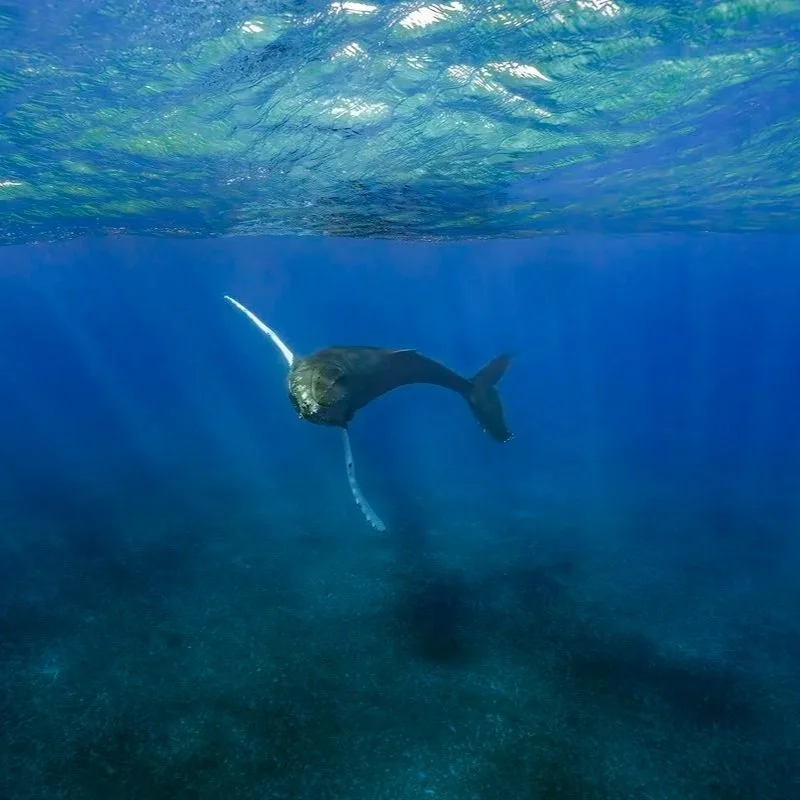
Photo © copyright by Joe Garza Photography
It's accessible from the US without a 15-hour flight. Grand Turk is served via Providenciales (PLS) — the main international hub for Turks and Caicos — with direct flights from Miami, New York, Charlotte, Boston, and Atlanta. A short 30–40 minute connecting flight gets you to Grand Turk. Most travelers from the eastern US can be in the water within 6–8 hours of leaving home. No liveaboard. No week-long commitment. You stay at a comfortable oceanfront hotel and go out every morning.
The water is unlike anything at Tonga or the Silver Banks. Snorkeling with humpback whales in Grand Turk puts you in 20–40 feet of water over a white sand bottom with visibility that stretches on seemingly forever. When a whale moves beneath you, you can see the entire animal in naturally lit, crystal-clear Caribbean water. Tonga and Silver Banks encounters often happen in deeper, darker open ocean — stunning, but fundamentally different in character and photographic quality.
No dive certification required. Unlike some Tonga and French Polynesia operators who cater primarily to experienced freedivers and scuba divers, Grand Turk encounters are fully accessible to confident snorkelers. Mask, fins, and ocean comfort are all you need.
The season is March — and it's perfect. Peak humpback whale migration through Grand Turk runs January through mid-April, with March consistently producing the most reliable encounters. Air temperatures in the low 80s°F. Water temperatures in the mid-to-upper 70s°F. Trade winds manageable, ocean typically calm. It's one of the most pleasant times of year to be anywhere in the Caribbean.
The operator community is small and ethical. Grand Turk doesn't have dozens of whale-watching boats competing for the same animals. The community is small, encounters are conducted at the animals' pace, and marine biologist guides know these whales individually — by fluke pattern, behavior, and history.
Why Grand Turk, Turks & Caicos Is the Best Place for Humpback Whale Photography
For photographers, Grand Turk isn't just one of the best places to swim with humpback whales — it may be the single best place on earth to photograph them.
Natural light refracts through 20–40 feet of shallow, clear Caribbean water in a way that simply doesn't happen in deeper open-ocean encounters. The whites of the pectoral fins glow against the sand bottom. The texture of barnacled skin catches light that would be lost at depth. Visibility is extraordinary. And above the surface, Grand Turk encounters regularly include active behavior — breaches, fluke dives, pec slaps — alongside slower, more intimate moments with mothers, calves, and escort whales.
Whether you're shooting with a dedicated underwater housing and dome port or a simple waterproof camera like a GoPro, what you'll capture in Grand Turk is unlike anything available elsewhere.
Our Grand Turk Humpback Whale Experience — March 2027
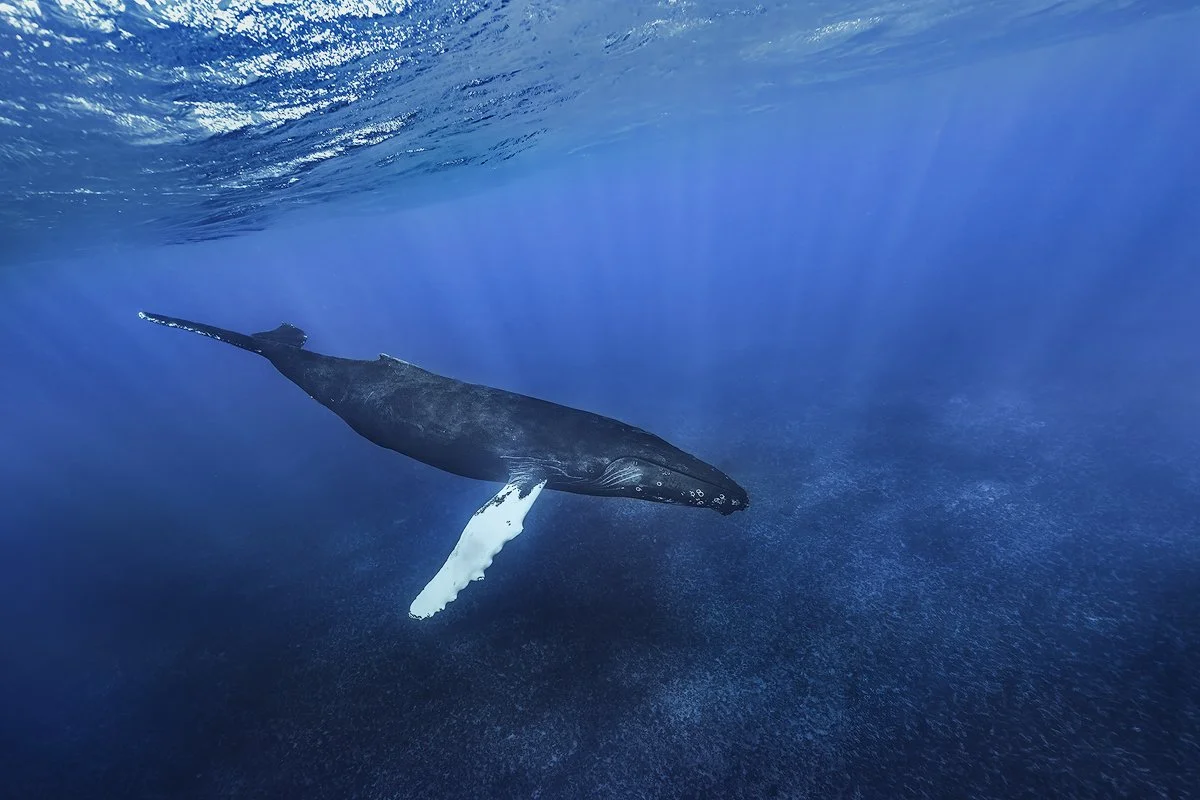
Humpback whale gliding through the blue waters of Turks & Caicos captures on a photography workshop by Sarah Zepnick & Joe Garza | Photo © copyright by Joe Garza.
In March 2027, Sarah Zepnick and Joe Garza Photography are leading a small-group humpback whale experience based at Osprey Beach Hotel in Grand Turk, Turks and Caicos. Six people. Six days. Four full days on the water with an experienced marine biologist eco-guide who knows these waters and these whales by name. Photography coaching woven throughout for those who want it. Camera or no camera — the experience alone is worth it.
No scuba certification required. No liveaboard. No 15-hour flight.
Just Grand Turk, March migration season, and six people in the water with humpback whales.
Learn more and reserve your spot →
Six spots. March 13–18, 2027. Lodging included.
These Feet Don't Stop is founded and led by Sarah Zepnick — adventure photographer, expedition guide, and travel coach. From bucket-list wildlife encounters to nonprofit expeditions and solo travel coaching, the mission is simple: get you outside, feed your soul, and help you take back your life — one trip at a time.